
 Posted by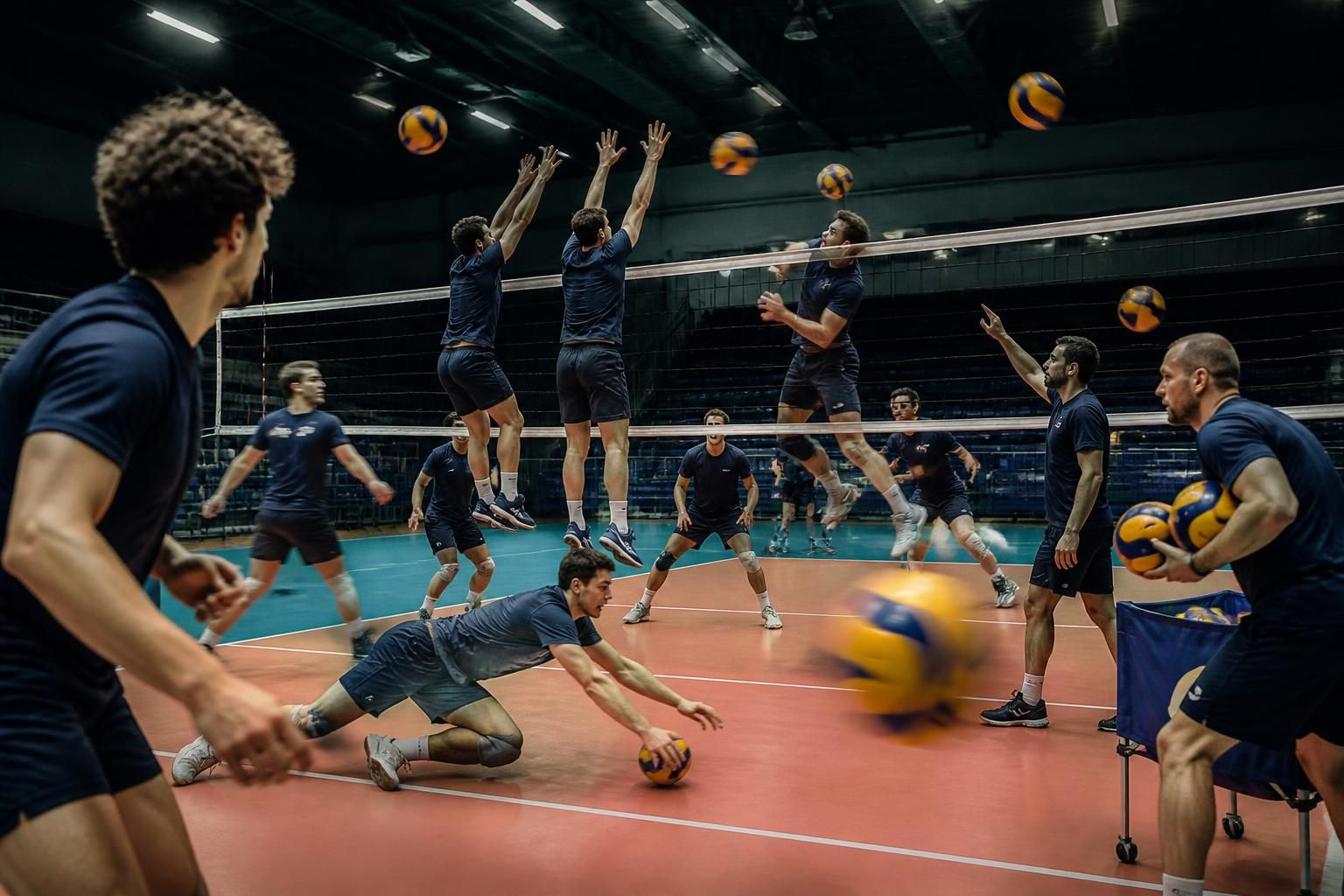
The exact year is lost in the mists of time1, but due to a particular sequence of events, I had to run several weeks of pre season practice with only one, or at times no, setter. Obviously this restricted a lot of the normal practice options, not the least being a functional six v six practice. On the occasions that I was able to draft in one setter for a few days at a time, I focused on that part of the game and allowed the defensive side to organise themselves as they saw fit. I deliberately gave no instructions with the vague idea, but no fixed expectation, that it might encourage deeper communication in the team. The result was interesting. As you would imagine with male players, some players had a strong desire to show they were in charge. From others it revealed a repressed dream to be a setter. From some, it was both. To my mild surprise, players approached the practice with intent and attention, and we produced functional, bordering on quality, practices despite the difficulties. My surprise was not that they might not be technically capable, rather that they would be so conditioned to playing volleyball with a high degree of specialisation that they might not be able to manage the chaos inherent when specialisation is for some reason removed. Indeed it seemed that at times they not only managed chaos well, but thrived under the challenge of managing it. There were definitely moments where they did ‘crazy’ things (an opposite attempting to set first tempo, for example), and I had to put my hands over my eyes, but I reasoned that intention and attention were both high, and those were the keys to getting through that period.
COACHING WEBINAR SPECIAL OFFER!!
The more surprising outcome was that as soon as some basic structure returned, i.e. the setters arrived, all other parts of the game were cleaner and more precise. Communication (especially non verbal that we know is more important) was more efficient and effective. Players seemed to understand their roles better and responded faster to game situations. They were better, in the short term at least, at playing volleyball. I tried to rationalise why that might be. It seemed obvious to me that attention and intention are keys. I reasoned that the absence of specialisation forced the players to focus in a different, deeper, way to solve the different problems that were being presented. When these constraints2 were removed, the high level of focus remained. Higher focus, however it is achieved, means earlier cue recognition, faster and more efficient decision making and better skill execution. Successfully solving problems increases confidence, not just in each player’s specialised area, but in all areas. Alternatively, or concurrently, they simply increased their understanding of the game by being forced to participate with a different perspective. Either way, it was an interesting exercise forced by circumstance that had a positive outcome.
COACHING WEBINAR SPECIAL OFFER!!
Since then, whenever I have been in a similar situation, even if for only a day or two at a time, I have embraced the opportunity. Sometimes, I will designate a player or players to play in different positions3. Other times, I will leave them to their own devices. What is consistent is that every time I have been rewarded with better precision and organisation in performance when the team became complete and players returned to their normal roles.
The lesson is, if the practice goal is to improve precision and organisation, don’t add more playing rules, or invent more patterns and systems4. Instead reduce embrace chaos. It will be difficult to watch for a time, but the effects will be worth it.
A collection of Coaching Tips can be found here.
- Not really, but I choose not to share. ↩︎
- At the time, Constraints Led Approach and Ecological Systems theories had not yet percolated through the system. I have however been heavily influenced by the Teaching Games for Understanding (TFfU) model, which as we know is exactly the same with worse marketing. ↩︎
- For example, on one such occasion I had middles rotate into the setter position, to act as setters. ↩︎
- Admittedly a difficult task for a coach. ↩︎

