
 Posted by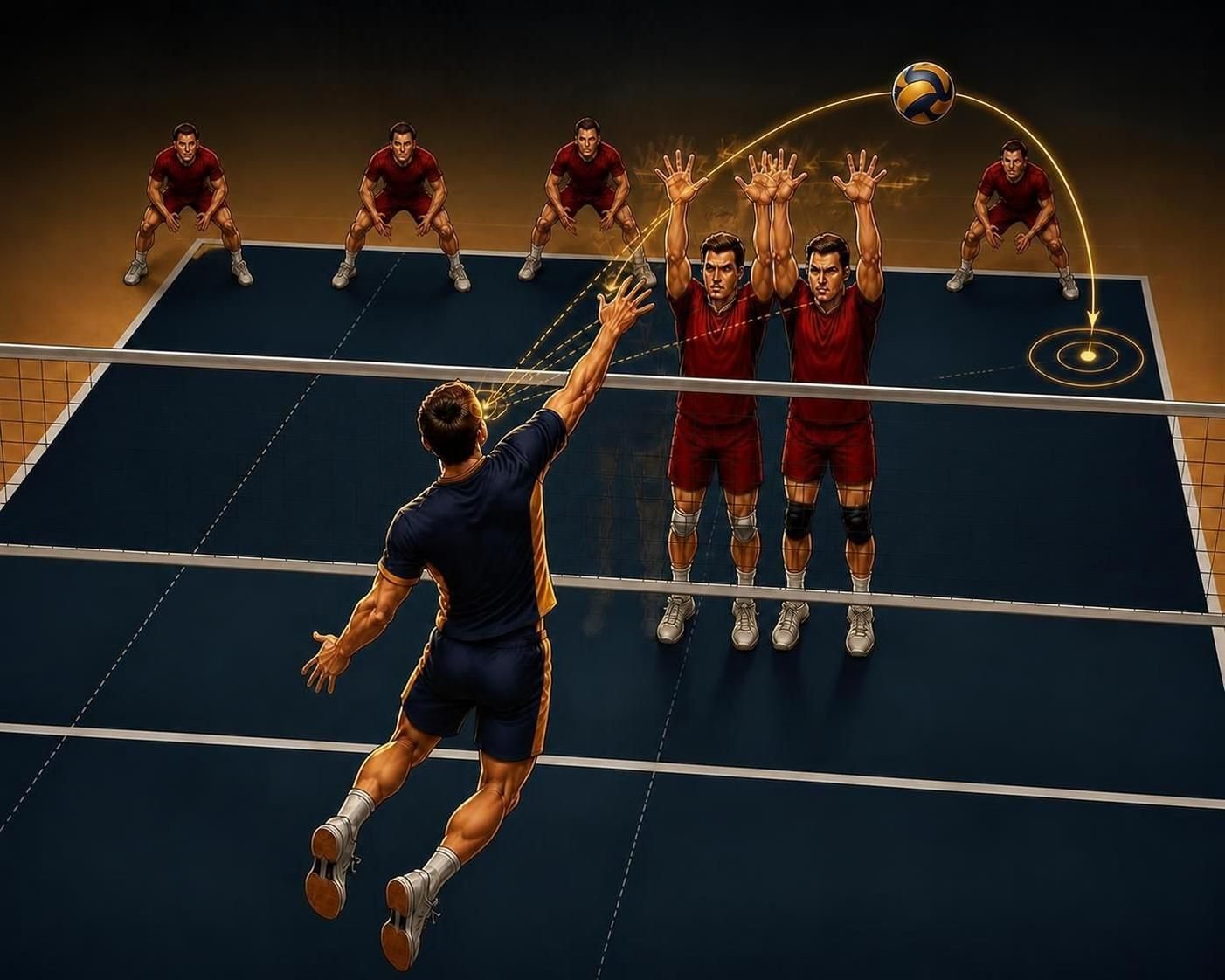
In 2014, in men’s volleyball at least, managing competition in practice was challenging (pun coming up). There were endless discussions and arguments and tantrums about whether balls were in or out or touched by the block1. Managing those arguments was a central part the coach’s work. When the video challenge system (there’s the pun, in case you missed it) was introduced something really interesting happened. We all learned that our eyes had been lying to us the whole time. The reason there were always arguments about in and out calls, was that nobody actually knew if the ball was really in or out. There was no reference point that we could use to know who was right. The video challenge system replayed calls on the stadium LED screen and finally gave us the reference point we didn’t know that we needed. In a short period of time everyone had ‘calibrated their eyes’, i.e. to know where the ball landed, and as a result there were far fewer arguments in practice2.
I have had a few players whose ‘behaviour’ when attacking was not what you would logically expect. For example Player M, who was 2.08m, with a spike reach of 3.70m, who would regularly spike into the net. For example, Player J with the 3.60m spike reach who would regularly be touched by the blocker who could barely reach 3.10m. On the other hand, I Player A who commented that they preferred playing at home because they knew which point of the back wall to aim for so that they hit the top of the block. All of those individual pieces of information (eye calibration, attackers doing unexpected things, spiking at the wall) sat unattended in my head for years quietly minding their own business. Until…
If you’ve been at any of my presentations, you would have heard the full version of the story of Player M3. The short version is that I eventually realised he hit into the net because he was forever waiting for the block to come into view so he could hit around it, as he had always been taught. Unfortunately, he was so much higher than the block it never came into his view. He was then ‘forced’ to try to hit a sharper angle to get around the block he was sure was coming but couldn’t see. Too sharp obviously.
Visiting practice of a top level team, you can often see the attacker talking to the blockers after an attack. The attacker will normally be asking the blocker which part of the block they hit. At first you might think it odd that a top level player does not know where they hit the block. Or you might let it sit in the back of your mind until the moment comes you remember that the block is not static, and in the time the attacker sees the block, makes their decision, executes that decision and the ball crosses the net, the block has moved. The block that the player hits into, or past, is not the block they saw. When the player asks the block for feedback they are cross referencing what they saw with what happened, ‘calibrating their eyes’ if you will, in a similar way to the way we did when the video challenge was introduced.
So why shouldn’t you spike past the block? In the case of Player M, he was too high to see the block at all. By waiting long enough for the block to come into his view, or not, he lost all of his natural advantages. He would have been better off ignoring the block completely and attacking specific areas of the court. Player J was not as high as his counterpart, so he could see the block. His ‘error’ was not accounting for the movement of block after his decision. He was not spiking past where the block will be, but rather where it was. In the lag time, the block moved into the area that he initially thought was free. He had not ‘calibrated his eyes’ correctly. And Player A? He had figured out a workaround for not seeing the block at all.
- I once worked with Player B who constantly had tantrums in practice. It didn’t take me long to figure out the the tantrums where only related to his actions. More specifically, his errors. Every attack error that he made was not really an error but actually landed in, or was touched. He was a really unlucky player. ↩︎
- The arguments about block touches also disappeared, but that was because players realised the ‘art’ of ‘selling a call’ was now irrelevant. ↩︎
- It is a cool story. It involved diagrams and plot twists. ↩︎

